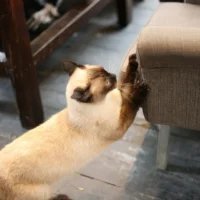


If Fluffy has turned your favorite armchair into a shredded masterpiece, you’re not alone. Though it can be frustrating, scratching is a healthy, normal activity for cats, not a sign that your feline overlord wants to test your patience. Cats scratch to stretch their muscles, sharpen their claws, and mark their territory. When this instinct collides with your living room sofa, problems can arise.
In this blog from Hobe Sound Veterinary Clinic, our Hobe Sound, FL veterinarians will explain why cats scratch furniture and what it means for their health and behavior. We also share practical feline scratching solutions you can start using today. With patience, redirection, and guidance from your vet, harmony between kitty and couch is possible.
Why Cats Scratch Furniture
Understanding Fluffy’s scratching habit starts with knowing why cats do it in the first place. Scratching is crucial for keeping those little paw daggers sharp, but at the end of the day it’s about more than just claw maintenance: it’s communication. Our feline companions have scent glands in their paws, so when they scratch, they leave both a visible and a scent-based message that says, “This spot is mine.”
The key reasons behind cat scratching behavior include sharpening claws and removing worn outer layers; stretching and exercising their muscles; stress relief during moments of excitement or anxiety; and marking territory, both visually and with scent.
So, when your feline pal targets your new loveseat, she isn’t being bad. Kitties are simply being cats. The goal here isn’t to stop scratching, but to redirect it to more appropriate places.
Click here to access our earlier post on purrplexing behavior from cats: this one is on Fluffy’s late-night yowling sessions.
Feline Scratching Solutions That Work
Luckily, there are several ways to protect your furniture while giving your kitty what they need.
Here are a few key tips:
- Provide scratching posts: Tall, sturdy posts covered in sisal rope or carpet give cats the texture they crave
- Place posts strategically: Position them near favorite furniture, windows, or sleeping spots
- Try horizontal scratchers: Some cats prefer cardboard or flat scratch pads
- Use catnip or toys: Encourage your kitty to explore new posts with positive reinforcement
- Offer variety: Cats can be picky, so try different textures, heights, and styles
Redirecting energy is the key. Every time Fluffy uses a scratching post instead of the couch, reward them with praise or treats. Over time, her behavior will likely shift.
Why Furniture Becomes a Target
Does your cat ignore the posts you bought and head straight for the sofa? There may be reasons for it. Kitties definitely have purrsonal preferences.
Some common causes for your pet to turn her cute nose up at her nail-care station include:
- Location: Scratching posts in out-of-the-way corners aren’t appealing
- Stability: Wobbly posts don’t provide satisfying resistance
- Texture preference: Some cats love sisal, while others prefer cardboard
- Territorial instinct: Your couch may be in a “prime real estate” spot where your feline pal wants to leave a message
Understanding your cat’s preferences helps you tailor solutions. Sometimes, it’s a matter of trial and error. You may just need to try new things until you find what works.
Chewy did an article on why cats scratch, which you can read here. Humane World for animals also has a post on scratching in kitties. Click here to read that one.
Cat Behavior Help From Your Veterinarian
Occasionally, scratching may signal stress or boredom. A cat with pent-up energy might scratch excessively, climb curtains, or zoom around the house. This is where cat behavior help from your Hobe Sound, FL, veterinarian can make a difference.
Setting an appointment can help rule out underlying health issues, like arthritis or nail problems. If your kitty gets the all-clear, it could be an anxiety issue.
We’re also happy to provide guidance on enrichment activities and offer advice for reducing stress triggers in multi-pet households.
Behavior consultations ensure you’re not missing a hidden cause behind Fluffy’s enthusiasm for upholstery.
Fun Fact: Scratching Is a Cat’s “Business Card”
Scratching leaves both a visible marker and a scent trail. To other cats, this is like leaving a calling card saying, “I live here.” It’s one of the many fascinating ways cats communicate without words.
FAQs About Cat Scratching Behavior
Is declawing a good solution to scratching?
No. Declawing is considered inhumane and harmful. It’s better to provide safe scratching outlets and trim nails regularly.
How can I protect my furniture right away?
Furniture covers, double-sided tape, or safe deterrent sprays can help until your kitty learns to use scratching posts.
Can nail trims reduce scratching damage?
Yes. Regular trimming by your vet or at home keeps claws shorter and minimizes damage.
Why does my cat scratch when I come home?
It’s often excitement. Scratching helps your kitty release energy and greet you in their own unique way.
Visit Our Hobe Sound Veterinary Clinic
If you’ve been searching for a “vet near me” because your furniture is suffering, it may be time for expert advice. At Hobe Sound Veterinary Clinic, our veterinarians in Hobe Sound, FL can help with cat scratching behavior, provide cat behavior help, and recommend safe, effective feline scratching solutions. Call today to schedule an appointment and keep both your kitty and your furniture happy.
Click here to visit our Service page and find out more about our clinic and the animals we treat. You can also go here to learn more about our Nutrition and Weight Management services.
This blog is for informational purposes only. Always consult with your veterinarian for the best diagnosis, treatment options, and medical guidance for your pet.